MATERIAL / WISP
Sandustry Amethelis Guide
Grow, collect, dry and route the light petals that lead into the energy chain.
A Flower drops four Amethelis and one Gold when destroyed. Amethelis drifts while falling and can be dried into Dry Amethelis, then processed toward Florin, Florinol and battery energy.
- State
- Wisp
- Per flower
- 4 Amethelis
- Next state
- Dry Amethelis
Harvest and movement
Wet Seeds grow into Flowers on Planter Boxes. Amethelis is light and drifts side to side, so open drops can spill material outside narrow collectors.
Energy chain
Dry Amethelis with Steam, heat it into Florin, condense Florin into Florinol, then store Florinol in a battery. Verify each structure against the current research tree.
Capture drifting petals consistently
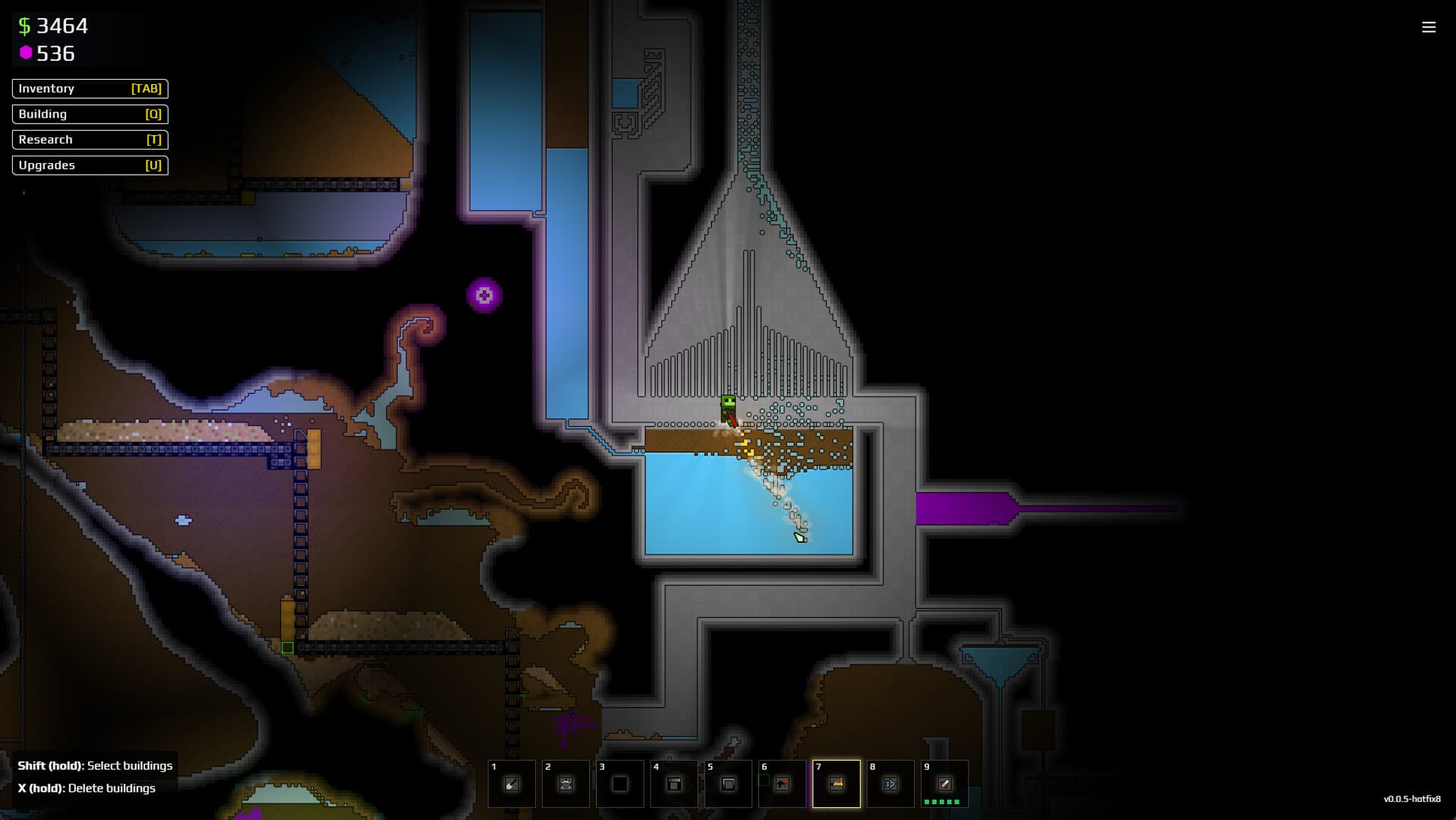
Place the collection channel directly below the Planter Box output and keep it narrow enough that sideways drift cannot carry Amethelis into the Gold lane. Test one Flower before duplicating the planter row, then watch where the four petals settle. Walls can contain the fall, but the bottom must still clear quickly. A tall decorative drop looks clean while empty and becomes unreliable when several Flowers release material at the same time.
- Separate Gold and Amethelis immediately below the planter.
- Observe one complete Flower output.
- Close side gaps where petals escape.
- Confirm the drying input accepts a sustained batch.
Keep the energy chain debuggable
Drying, heating and condensing are separate state changes, so give each one a short buffer and visible output. When the battery chain stops, identify the last material state that still appears instead of adjusting every machine. A missing Dry Amethelis output points to the Steam stage; Florin without Florinol points later in the chain. This modular approach also makes version changes easier to test because one conversion can be rechecked without dismantling the full factory.
EVIDENCE LOG