MATERIAL / LIQUID
Sandustry Water Guide
Sources, reactions, transport limits and the failure modes behind disappearing or misplaced water.
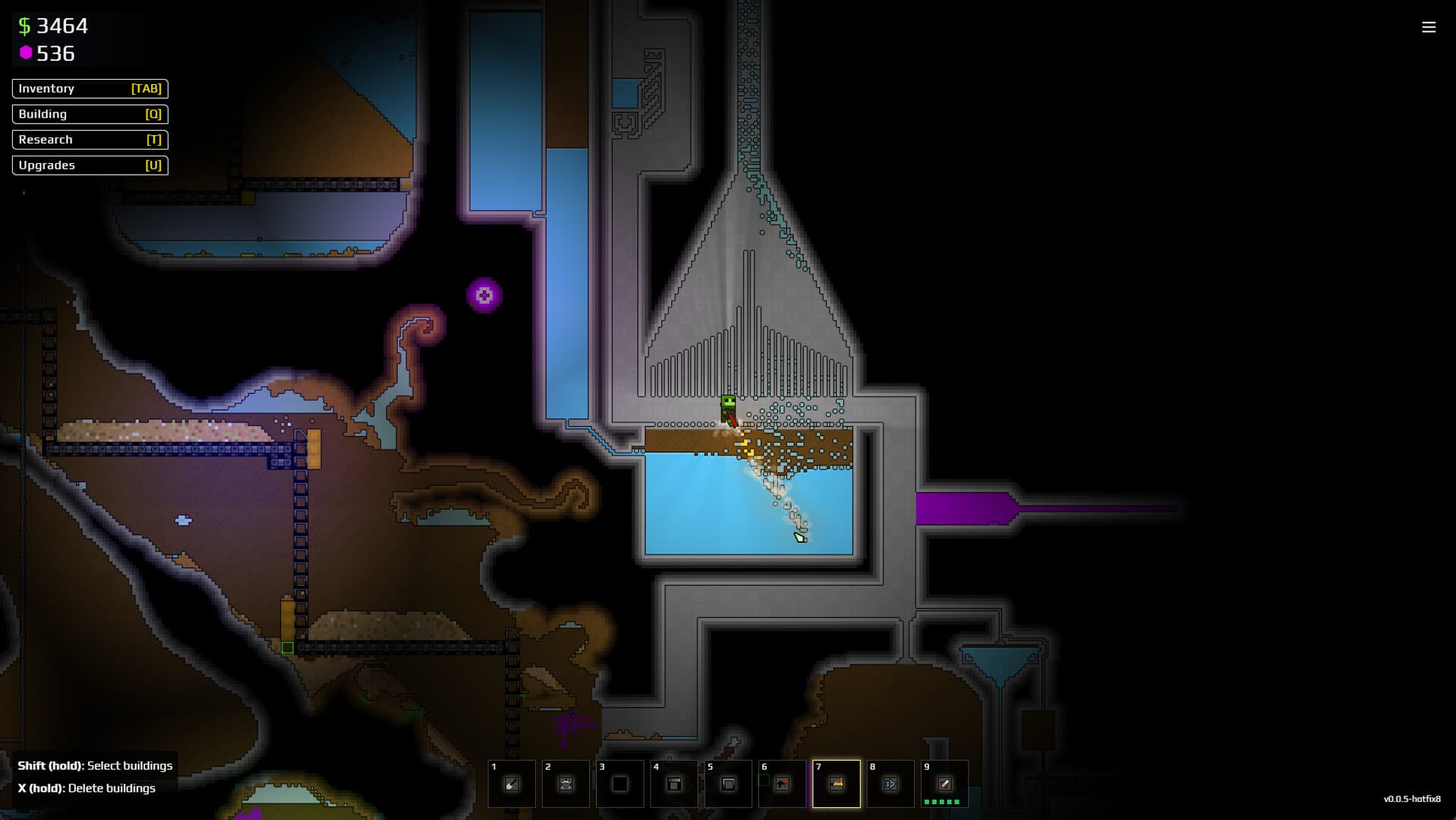
Water comes from lakes, underground deposits, melted Ice, rain formed from Steam reaching the sky, and Lumlings. It makes Wet Sand and Wet Seeds, but careless use can drain finite reservoirs.
- State
- Liquid
- Density
- 100
- Core ratio
- 1 Sand + 1 Water → 2 Wet Sand
Sources and reactions
Water touching Sand replaces both pixels with Wet Sand. Water touching a Seed produces a Wet Seed. Ice can be melted and Steam can return as rain after reaching the sky.
Flow and troubleshooting
Blocks, Conveyor Belts, Kinetic Presses and Flux Emanators block Water. Droplets that fail to settle can eventually evaporate, so build enclosed basins and visible overflow paths.
Build a controlled wetting cell
Separate the water reservoir from the main Sand mass with a gate-sized opening or narrow reaction edge. Introduce only enough Sand to confirm the Wet Sand exit clears, then increase the feed. A contained cell protects the finite source, prevents Water from escaping into unrelated machinery and makes suspended droplets easier to spot. Keep the collection area below the reaction visible so a blockage does not quietly consume the entire reservoir.
- Wall the reservoir before opening a reaction face.
- Test the Sand contact with a small amount of Water.
- Give Wet Sand a direct gravity path to processing.
- Add an overflow or shutoff before increasing input.
Diagnose missing or misplaced Water
Check whether Water reacted with Sand or Seeds, escaped through an unsealed corner, remained as tiny unsettled droplets or was displaced by a later edit. Trace from the reservoir toward the last visible pixel instead of adding a new source immediately. Blocks and several machines stop Water, so a route that appears open may actually terminate at a structure face. Rebuild the smallest boundary that restores containment, then run a short observation cycle before reconnecting the full feed.
EVIDENCE LOG